Our Dental Services
 |
Patient Exams, X-Rays, and Cleanings (Prophylaxis) |
Typically, an exam, x-rays, and a cleaning are all completed in one appointment.
Patient exams are performed to determine existing and needed dental care. Exams often include the use of dental x-rays.
Radiographs allow us to see things that could not be seen just by looking inside the mouth. Please keep in mind that x-rays are taken to directly benefit your dental health. Routine radiographs are taken to provide you with the highest standard of dental care, to aid in diagnosing and treatment planning. Here a few of the most common x-rays taken:
- Bitewing X-Rays: This type of x-ray is usually performed once a year at one of your 6-month cleaning/exam visits. These x-rays show us the back teeth only. Typically 1-2 are taken on each side of the mouth. Bitewing x-rays show both the upper and lower teeth and how they touch (occlude). They are used to check for decay in between the teeth. Without bitewing x-rays, dental decay in between the teeth is often not found until the decay is so large it causes pain and further extensive treatment is needed to restore the tooth.
- Periapical Film (PA): Usually a periapical film is taken when a patient is experiencing pain in a specific tooth. This provides an image of the entire tooth, crown to root tip. A periapical film can show an abscess, cyst, bone loss around a tooth, etc. This type of radiograph is crucial in diagnosis as it provides fine detail.
- Full Mouth Series: A full mouth series of x-rays is a combination of both bitewings and periapicals. This series includes 2-4 bitewing x-rays and no more than 14 periapical x-rays. Typically, this is taken every 5 years. A full series is taken to allow the dental professional a look inside the mouth to see things they would not otherwise. We can see the bone levels surrounding teeth. If a person suffers from periodontal disease, this helps us to see just how much bone has been lost around the teeth. We check for cysts, tumors, abscesses and other conditions and diseases.
- Panoramic X-Ray/Panorex: A panoramic film (also known as the Orthopantomograph) captures both jaws and teeth in one picture that takes about a minute to complete. The panorex will show the maxilla (upper jaw), the mandible (lower jaw), all the teeth including the "wisdom teeth," the frontal & maxillary sinuses, the nasal cavity and the temperomandibar joints (jaw joints). A panorex is useful in locating wisdom teeth, diagnosing jaw problems and planning orthodontic treatment.
A dental prophylaxis is also known as a cleaning, and is a preventive measure against periodontal (gum) disease. It is typically performed every 6 months for patients not suffering from periodontal disease. (If you would like to read further about periodontal disease and your treatment options, please see our Periodontal Therapy page.)
Cleanings involve the removal of plaque (soft, sticky biofilm) and calculus deposits that have built up on teeth over time. Plaque is unlike calculus; it is very soft and can be removed at home with our toothbrush. Calculus, on the other hand, is very hard, rough and rock-like, and must be removed by a dental professional. It is important to have this rough, rock-like material removed on a regular basis because bacteria grabs and holds much easier to surfaces that are rough, as opposed to smooth and slippery surfaces. The calculus deposits and bacteria that accumulate can irritate our gums, causing gingivitis, and can eventually lead to bone loss and periodontal disease.
With that being said, not only do our teeth feel great after a professional dental cleaning, but it leaves the teeth smooth and clean, aiding you in the fight against bacteria at home!
 |
Dental Fillings |
A dental filling is used to restore loss of tooth structure. The main cause of this loss is due to dental caries (cavities). It can also be caused by external trauma. Placing a filling helps reestablish the function and morphology of the tooth.
There are two types of fillings:
- Silver, also called amalgam fillings
- White, or composite fillings
As we all know, the composite fillings are much more aesthetically pleasing as they match the color of our teeth. However, when a filling is needed, Dr. Seneczko will discuss with you what restorative material she believes to be best for your specific needs.
 |
Dental Bridges |
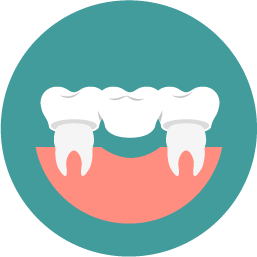
A dental bridge is a fixed appliance used to replace one or more missing teeth.
Placing a bridge can help avoid many issues that arise when a patient has one or more missing teeth. Once a gap is created due to tooth loss, the remaining teeth try to compensate by filling in the space by drifting or rotating. This drifting and rotating can throw the patient's bite off, causing TMJ (temporomandibular joint) problems. In addition, the imbalance created by missing teeth can also lead to gum disease. A bridge can also boost a patient's self-confidence. When someone is missing one or more teeth it can impact their speech, and even change their appearance. A bridge can help fix these problems that can occur with missing teeth.
A bridge involves placing crowns on the two teeth on either side of the gap and closing the space with a pontic (custom-made false tooth/teeth). The two crowns on either side and the pontic are all fused together to make one unit.
The procedure is somewhat similar to that of a crown. It takes a series of two appointments:
- The first appointment is the longest. At this time the two teeth surrounding the gap will be reduced as much as necessary to accommodate the crowns. An impression is taken of the area where the bridge will be placed. This impression will be sent to our dental laboratory, serving as a model from which the bridge will be made. Lastly, a temporary bridge will be cemented for approximately two weeks, until the permanent bridge is ready.
- When you return for the final appointment, the temporary bridge is removed. The permanent bridge will be cemented, and any necessary adjustments will be made.
There is one thing you must be aware of with a bridge: Cleaning it is different than with the rest of our teeth. Since the unit is fused together we cannot get in between the crowns with floss. In order to keep the gums healthy you must still floss! With a bridge, you actually floss under the pontic to remove any sticky plaque and food debris. Don't worry, we'll teach you!
 |
Tooth Extractions |
Extracting a tooth, or teeth, can be done for a number of different reasons:
- Patients going through orthodontic work may need extractions to make room for all the teeth or to provide a path for eruption
- Severe decay
- Severe infection
- Severe periodontal disease
- Broken or fractured tooth/teeth
- Insufficient 3rd molars, also known as wisdom teeth
If you need an extraction, Dr. Seneczko may refer you to an oral surgeon, or sometimes it can easily be done right here in our office.
 |
Periodontal Therapy |
There are two types of periodontal (gum) disease: gingivitis and periodontitis.
Gingivitis is the mildest form of periodontitis. Gingivitis usually is the result of poor oral hygiene. It causes red, swollen gums that bleed easily. The upside to a case of gingivitis is that with professional care and good oral hygiene, it can be reversed.
Periodontitis is a chronic bacterial infection that affects the gums and bone surrounding the teeth. It is caused from an aggressive immune system response to the microorganisms that grow and adhere to your teeth below the gum line. Plaque and bacteria that have grown below the gums release toxins, causing inflammation. In return, the body activates the chronic inflammatory response, which basically means the body turns on itself.
As this takes place, the tissues surrounding the teeth, gums and bone are destroyed. The gums begin to pull away from the tooth, creating a "pocket" that becomes infected. Think of a turtleneck sweater, the sweater being your gums and the neck your tooth. A healthy mouth has tight little turtlenecks around each tooth. A mouth suffering from peridontitis has loose, ill-fitting turtlenecks around the teeth. The area between the tooth and the loose turtleneck is the infected gum pocket. If left untreated the disease process will continue. More and more gum tissue and bone will be destroyed and lost, which can lead to tooth loss.
Periodontitis is the number one cause of tooth loss in adults over the age of 35. Often, this disease has very mild to no symptoms. This is why it is crucial to visit us on a regular basis. The only way to diagnose periodontitis is through an exam where we measure the depth of the gum pockets and review bone levels on radiographs.
Unfortunately, once tissue and bone have been lost as a result of periodontitis, it is lost for good. Periodontitis is different from gingivitis in that it is irreversible. However, there are treatment options depending on the severity of the disease.
Scaling and root planing is a non-surgical periodontal therapy option. Scaling is the removal of calculus and bacteria from the tooth and root surface. Root planing smooths the root surfaces, making it more difficult for the plaque, calculus and microorganisms to adhere. In doing this we hope to rid the deep gum pocket of infection, allowing the gum to reattach and causing the pocket to become healthy and shallower.
If the disease is advanced, and scaling and root planing won't cut it, there are surgical options.
Once you have been diagnosed with periodontitis, Dr. Seneczko will determine the severity of the disease. Many cases can be treated right here in our office with the non-surgical treatment option, scaling and root planing. If further extensive treatment is needed, we will refer you to one of our great periodontists in the area.
 |
Dental Crowns |
A crown is a type of restoration that covers the entire tooth. Dental crowns can be used for many different reasons:
- to protect a cracked tooth
- to restore function of a tooth with a large amount of decay
- to restore a broken tooth
- to restore a tooth with a preexisting large filling
- to improve the overall appearance of a tooth or teeth
- to cover a dental implant
- to restore a tooth after endodontic therapy (root canal)
Crowns can be made one of three ways: all porcelain, all gold, or porcelain fused to metal.
Porcelain crowns are typically used for front teeth. This option is the weakest of the three as it does not contain any gold, but it provides the best aesthetics for crowns of the front teeth.
Gold crowns are most often used when placing a crown on back molar teeth. The gold is very durable, and therefore a great option for those who clench and/or grind their teeth.
Porcelain-fused-to-metal crowns might be likened to an M&M, with gold as the chocolate underlayer and porcelain as the outer colored shell. This type of crown provides both strength and aesthetics.
When deciding which type of crown is best for you, Dr. Seneczko will discuss all the pros and cons and together you will discover your most suitable option.
The procedure for a dental crown is done in two appointments:
- The first appointment is the longest. The tooth is prepared by removing the necessary amount of tooth structure. An impression of the tooth is then taken, which will later be sent to the dental lab where the permanent crown will be made. The last step of the first appointment is placement of the temporary crown.
- The second appointment typically takes place approximately two weeks later. This appointment is shorter. The temporary crown is removed and the permanent crown is cemented and any needed adjustments are made.
 |
Root Canal Therapy |
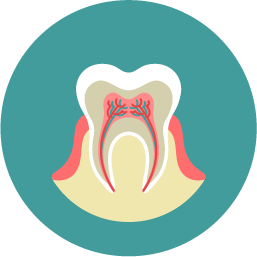
Our teeth are composed of three layers, the outermost layer being the enamel. The middle layer is dentin and the inner layer is called the pulp. The pulp chamber and root canals contain nerves, blood vessels and connective tissue.
Root canal therapy can be needed for a number of different reasons:
- Infection. If a cavity is left untreated, the decay continues to spread. The decay will spread through the enamel and dentin layers, into the pulp. Once it reaches the pulp the only way to treat the infection is root canal therapy. Antibiotics cannot cure infection inside the pulp chamber and root canals.
- Trauma. When the pulp is exposed due to a fractured or broken tooth.
- Past Trauma. Trauma does not always result in a broken tooth, but over time a tooth that has once encountered trauma can slowly die and will need root canal therapy. Many times when a tooth is dying or dead it will discolor, turning a darker color than the surrounding teeth.
- Death of Tooth. Sometimes teeth die for no apparent reason. This may be the most irritating because there is no visible explanation for it, but they too need root canal therapy.
Some signs and symptoms to be aware of: sensitivity to heat, sensitivity to pressure, discoloration of the tooth and/or swelling near the tooth. These may indicate a problem and should be evaluated by Dr. Seneczko.
When root canal therapy is needed it will show up on a periapical x-ray. A periapical x-ray shows the entire affected tooth, from crown to root tip. An infected tooth needing treatment looks different on the x-ray than a healthy tooth. The area surrounding the root tip(s) of an infected tooth is much more olucent, or dark, because of the surrounding infection. This indicates that treatment is needed.
Here is what you can expect at your root canal therapy appointment:
- The affected tooth will be isolated using a rubber dam. This thin plastic shield helps keep the area dry during the procedure.
- A small hole will be drilled into the tooth until the pulp chamber is reached.
- Once the pulp chamber is reached, many specialized instruments are used to remove the infected tissue and clean out the canals. It is very important that every bit of nerve tissue is removed. An x-ray will be taken to check the progress. This will show if further removal of nerve tissue is needed.
- After all infected pulp and nerve tissue is removed, a rubber-like material called gutta purcha is placed inside the pulp chamber and canals. This will seal the inside of the tooth.
- Lastly, a temporary filling is placed to close off the access hole.
This filling is indeed temporary. Many times after root canal therapy the tooth will need a crown. Once the nerve tissue is removed, the tooth is dead and becomes brittle. A crown is often needed to protect the tooth from breaking or cracking, although there are some instances where a permanent filling will do just fine.
Many times Dr. Seneczko will perform root canal therapy in the office. If she thinks that it would be better handled by an endodontist (a dentist specializing in diseased pulp tissue), she will not hesitate to give you a referral.
 |
Dental Sealants |
The chewing surfaces of our teeth are not flat, but have many hills and valleys called pits and fissures.
These pits and fissures are so tiny, deep and narrow that not even a single toothbrush bristle is small enough to properly clean them. This makes for a perfect hiding place for plaque and bacteria, which can eventually lead to tooth decay.
Sealants make the chewing surface smooth by flowing a clear material into all those tiny pits and fissures. This can help prevent decay on the chewing surfaces of teeth.
Applying sealants is a very simple, painless procedure. No anesthesia is required.
- The pits and fissures are cleaned thoroughly.
- We etch the surface where the sealant will be applied. Etching makes the surface rough so the sealant material will adhere more readily.
- Next, we paint/flow sealant material into all those tiny pits and fissures.
- Lastly, a bright curing light is used to harden the sealant.
All done! Easy as that!
After the procedure is complete, you can eat immediately; no wait time is required.
 |
Teeth Whitening |
In our office we offer three whitening alternatives:
- In-office whitening
- A take-home bleaching kit
- Prefabricated take-home whitening trays
In-office whitening involves placing a rubber dam to isolate the teeth you want bleached. The whitening agent is then applied to your teeth and you sit comfortably while the bleach works. This can take anywhere from 10 to 60 minutes.
The take-home bleaching kit requires impressions to be taken of your top and bottom teeth. These impressions are used to make custom-fit bleaching trays. When you return a couple of days later, your custom trays are ready and you can begin the whitening process at home.
The prefabricated take-home whitening trays are available for pickup in our office. The whitening kit includes 10 sets of upper and lower trays that are to be used for an hour a day and then disposed of.
We can discuss which option best suits you at your whitening consultation visit.
 |
Dental Bonding and Veneers |
Bonding and veneers are two different types of cosmetic dental restorations that transform your teeth's appearance by changing their shape and/or color.
Bonding or veneers could be your solution if you:
- Have a chipped tooth/teeth
- Have teeth that are not as white as you would like them to be
- Have worn the teeth's edges away through normal wear and tear or clenching/grinding
- Have spaces between your teeth you would like closed
- Would like to straighten your teeth up a bit without going through braces
Bonding is when a tooth-colored resin (plastic material) is applied to a tooth to improve its appearance. Bonding is a pretty simple procedure. The tooth will be prepped by slightly roughening the surface. The roughened surface will help the bonding material adhere to the tooth. Next, the tooth-colored resin is placed. The resin starts out as a putty-like material, allowing Dr. Seneczko to mold and smooth it until the desired shape is reached. A curing light is then used to harden the material; it is now "bonded" to the tooth. Finishing touches are made so the bonding matches the remaining tooth surface.
Veneers are a custom-made, wafer-thin, tooth-colored shell that covers the front of a tooth or multiple teeth. The preparation is quite simple. Dr. Seneczko will remove less than 1mm of enamel from the front surface of the tooth. An impression is then taken and will be sent to our lab, where the veneer will be made. Often a temporary veneer is not needed. The lab typically takes about two weeks to create the veneer. Once the two weeks is up you will return to the office, where the veneer will be permanently cemented to the tooth.
When choosing the cosmetic procedure that is most appropriate for you, it is best to schedule a consultation with Dr. Seneczko. She can discuss in detail the pros and cons of each option so you can make an educated decision.
 |
Bite Splint Therapy |
A bite splint is a plastic appliance worn at night by patients who clench and/or grind their teeth during sleep.
Clenching and grinding obviously takes a toll on our teeth:
- Many people crack or chip their teeth. This can result in needing dental fillings or crowns.
- Over time, the teeth will begin to show occlusal, or biting surface, wear. It is not uncommon to see that a patient has worn through the outermost layer of tooth, the enamel, and into the second layer, dentin. Wearing through the protective layer of enamel and exposing the dentin can often cause sensitivity.
- Clenching and grinding also causes gum recession. Gum recession is when the gum pulls away from the crown of the tooth and exposes some of the root surface. The root surface is not covered by the hard, protective shell of enamel. Therefore, when we have gum recession we are directly exposing the dentin layer, often resulting in tooth sensitivity.
Many patients who clench and/or grind not only have problems with their teeth, but also have issues with their temporomandibular joint, or TMJ:
- Popping or clicking noises on one or both sides when opening the jaw wide
- Trismus, or difficulty opening the mouth
- Pain in one or both of the temporomandibular joints
- Frequent headaches
- Earaches
Wearing a bite splint at night helps to protect the teeth from the issues listed above. It also aids in relaxing the jaw joint, reducing many TMJ problems associated with clenching and grinding.
The bite splint we offer is custom-fit and made to be worn over the top teeth.
A bite splint takes a minimum of two appointments:
- The first appointment is short and sweet. Impressions are taken of the top and bottom teeth. Next, a bite registration is taken. This is a type of dental impression that shows how your teeth naturally bite together. These impressions are sent to our dental lab, where the bite splint will be made.
- You will return to our office after the bite splint is complete. At this time, Dr. Seneczko will adjust the bite splint so it fits comfortably. Any special instructions or advice will be given at this time.
Sometimes more than the initial adjustment is needed, as you grow accustomed to wearing the bite splint. If so, a simple 30-minute appointment usually takes care of this.
 |
Full and Partial Dentures |
Full and partial dentures are both removable appliances used to replace missing teeth. A full denture is used when a patient is edentulous (has no teeth). A partial denture is used for a semi-edentulous patient (missing some teeth).
Replacing missing teeth has many advantages:
- Chewing Food.
- Speaking. Missing teeth, especially front teeth, can affect your speech. Replacing missing teeth improves pronunciation.
- Appearance. Teeth are essential for supporting our lips and cheeks. Once the teeth are lost, the face appears to be collapsed. Replacing teeth with a full or partial denture can help restore that.
- Self-Esteem. Last, but certainly not least, we want you to feel confident about your smile!
Full dentures are a removable prosthetic device. They are custom-made to fit the remaining soft and hard tissues in the mouth. They can be made for both the top and bottom arches.
A partial denture is custom-fit around the remaining teeth and tissues.
Both options require multiple visits. If you are thinking of replacing missing teeth, please do not hesitate to call our office and set up a consultation appointment.
 |
Dental Implant Restoration |
Dental implants are unlike any other tooth replacement option. When compared to other tooth replacement options like bridges, dentures, and partials, implants are the more natural replacement approach. They can be used to replace one or more missing teeth. They can also be used to anchor bridges and dentures.
An implant is a small post made of titanium that acts like a natural root structure. The post is placed into the jaw bone. After the post is placed, time is needed for the jaw bone to grow and integrate around it. Once the bone has grown around an implant, a crown, bridge or denture can be placed on it.
The placement of the implant is done by either an oral surgeon or a periodontist. The final restoration procedure (crown, bridge, or denture) is done here with Dr. Seneczko.